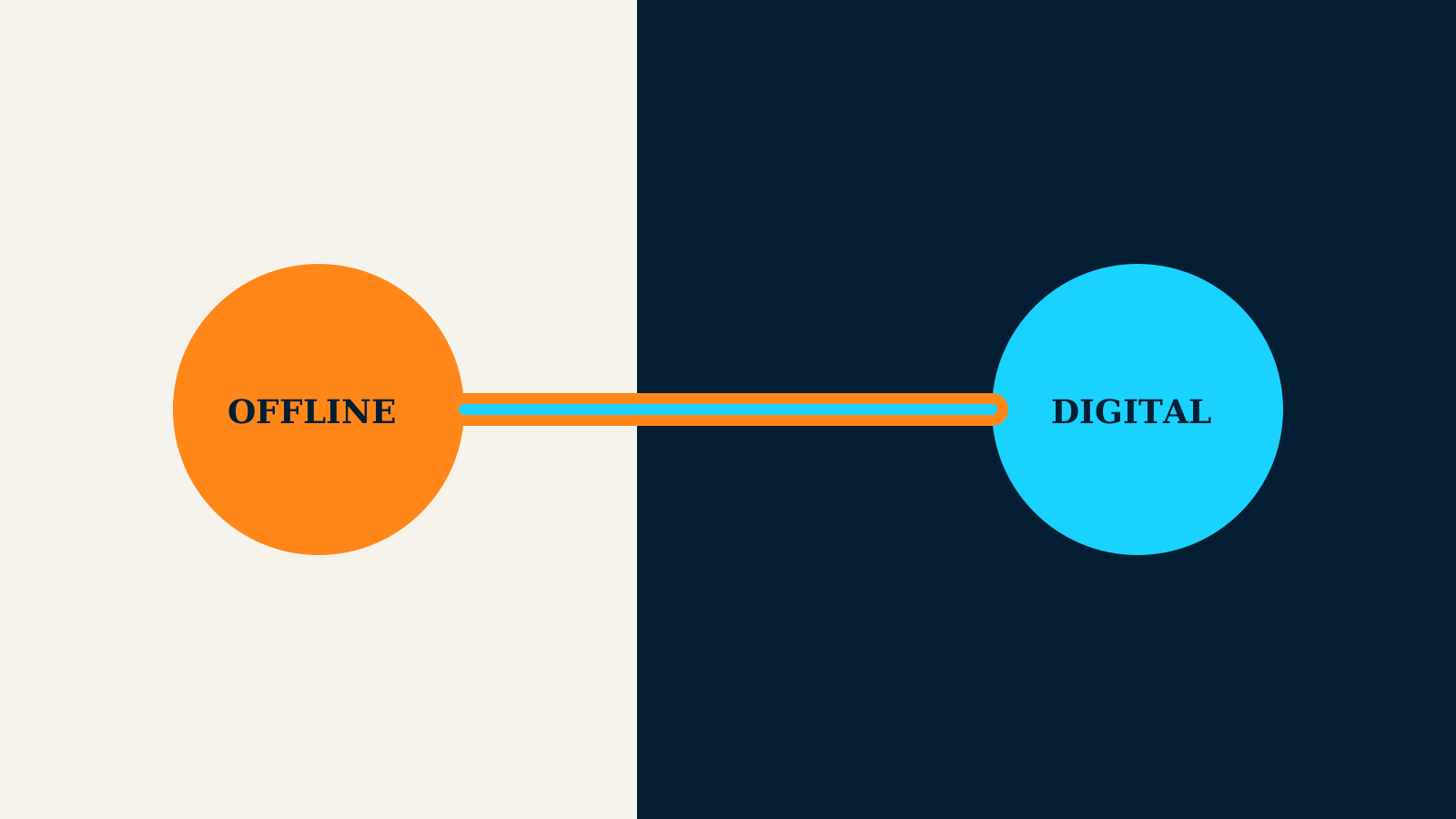
Digital marketing did not erase rooms, stages, packaging, or printed materials. It changed what those moments must do: capture attention in the physical world, then hand people a clean path into a measurable digital journey. Brands that treat offline and online as rival budgets leave value on the table. Brands that design the handoff intentionally compound recognition across both environments.
Orpheus works at that intersection — web experiences, content systems, and studio production — because integration is a design problem as much as a media-buying problem. The goal is continuity: same story, same offer clarity, same ability to act, whether someone met you at an event or arrived from search on a Tuesday afternoon. Integration succeeds when every physical touchpoint has a digital next step that feels continuous and easy to complete.
Treat offline as a demand entry point, not a silo
Trade shows, pop-ups, direct mail, packaging inserts, and sponsorships still create high-intent moments. The failure mode is a beautiful booth with a weak digital landing experience, or a QR code that dumps people on a generic homepage that ignores why they scanned in the first place. When stakeholders ask for more modules, return to the primary job and cut anything that does not advance it.
Plan the destination before the offline creative. Dedicated landing pages, short URLs, and campaign-specific offers make the physical impression accountable. Offline should open a chapter, not strand the reader mid-sentence. For site-level marketing foundations, see website marketing strategy. Keep the standard visible in critiques so teams do not trade clarity for novelty under deadline pressure. Keep the standard visible in critiques so teams do not trade clarity for novelty under deadline pressure.
Design the handoff for speed and clarity
People moving from physical to digital are often mid-stride — walking a floor, commuting, standing in a store aisle. The first mobile screen must load quickly, state the offer plainly, and ask for only the information needed to continue without inventing a marathon form. That discipline is what separates intentional product design from decorative redesigns that look new but behave the same. Document the decision so future pages inherit the same logic instead of reinventing hierarchy each sprint.
Match creative: colors, photography, and headline language should feel continuous. Cognitive switching costs rise when the digital experience looks unrelated to the offline prompt. Continuity builds trust; discontinuity feels like bait. This is where strong web experiences and campaign landing systems earn their keep. Revisit the pattern after launch with real sessions, because lab assumptions rarely survive first contact with busy users. Revisit the pattern after launch with real sessions, because lab assumptions rarely survive first contact with busy users.
Use studio craft to make offline moments shareable
Events and in-person experiences become digital assets when they are captured well: speaker sessions, product demos, customer conversations, and atmosphere that later fuels social, email, and the website. Production quality determines whether those assets feel worth circulating or quietly die on a shared drive. Document the decision so future pages inherit the same logic instead of reinventing hierarchy each sprint. Consistency across templates matters as much as any single clever interaction on a homepage hero.
Plan capture as part of the event strategy, not as an afterthought with a phone at the back of the room. Lighting, audio, and shot lists turn ephemeral moments into durable marketing materials. Explore related production thinking in hosting a great virtual event. Consistency across templates matters as much as any single clever interaction on a homepage hero. When stakeholders ask for more modules, return to the primary job and cut anything that does not advance it.
Connect measurement without pretending attribution is perfect
UTM parameters, unique offer codes, QR campaign IDs, and post-event surveys help connect offline spend to digital behavior. Perfect multi-touch attribution is rare; directional accountability is still valuable for deciding what to repeat and what to retire. Keep the standard visible in critiques so teams do not trade clarity for novelty under deadline pressure. Keep the standard visible in critiques so teams do not trade clarity for novelty under deadline pressure.
Agree in advance what success means: registrations, qualified conversations, content engagement, or assisted pipeline. Then instrument the paths that can actually be observed. Ambiguous goals produce ambiguous retrospectives that waste the next planning cycle. That discipline is what separates intentional product design from decorative redesigns that look new but behave the same. That discipline is what separates intentional product design from decorative redesigns that look new but behave the same.
Keep brand systems consistent across mediums
Integrated marketing fails when print, stage graphics, and web modules drift into different visual dialects. Shared design systems — typography, color, photography direction, voice — make the brand recognizable in a hallway and in a browser tab without forcing people to relearn who you are. Consistency across templates matters as much as any single clever interaction on a homepage hero. Revisit the pattern after launch with real sessions, because lab assumptions rarely survive first contact with busy users.
Content guidelines matter too. The claim you make on a banner should be defendable on the landing page and in sales follow-up. Integration is operational as much as creative, and it requires ownership across teams that usually plan on separate calendars. Revisit the pattern after launch with real sessions, because lab assumptions rarely survive first contact with busy users. When stakeholders ask for more modules, return to the primary job and cut anything that does not advance it.
Build a loop: experience, capture, convert, learn
The strongest programs run a loop. Host or appear somewhere meaningful, capture the story, route attention to a clear digital action, then feed learnings into the next offline moment. Each cycle improves messaging and targeting without starting from zero every quarter. Document the decision so future pages inherit the same logic instead of reinventing hierarchy each sprint. Document the decision so future pages inherit the same logic instead of reinventing hierarchy each sprint.
Orpheus helps teams close that loop across digital product and production. When marketing is treated as one journey with multiple doorways, offline stops competing with digital and starts feeding it. Ready to connect the threads? Contact us to map the handoffs. When stakeholders ask for more modules, return to the primary job and cut anything that does not advance it. That discipline is what separates intentional product design from decorative redesigns that look new but behave the same.