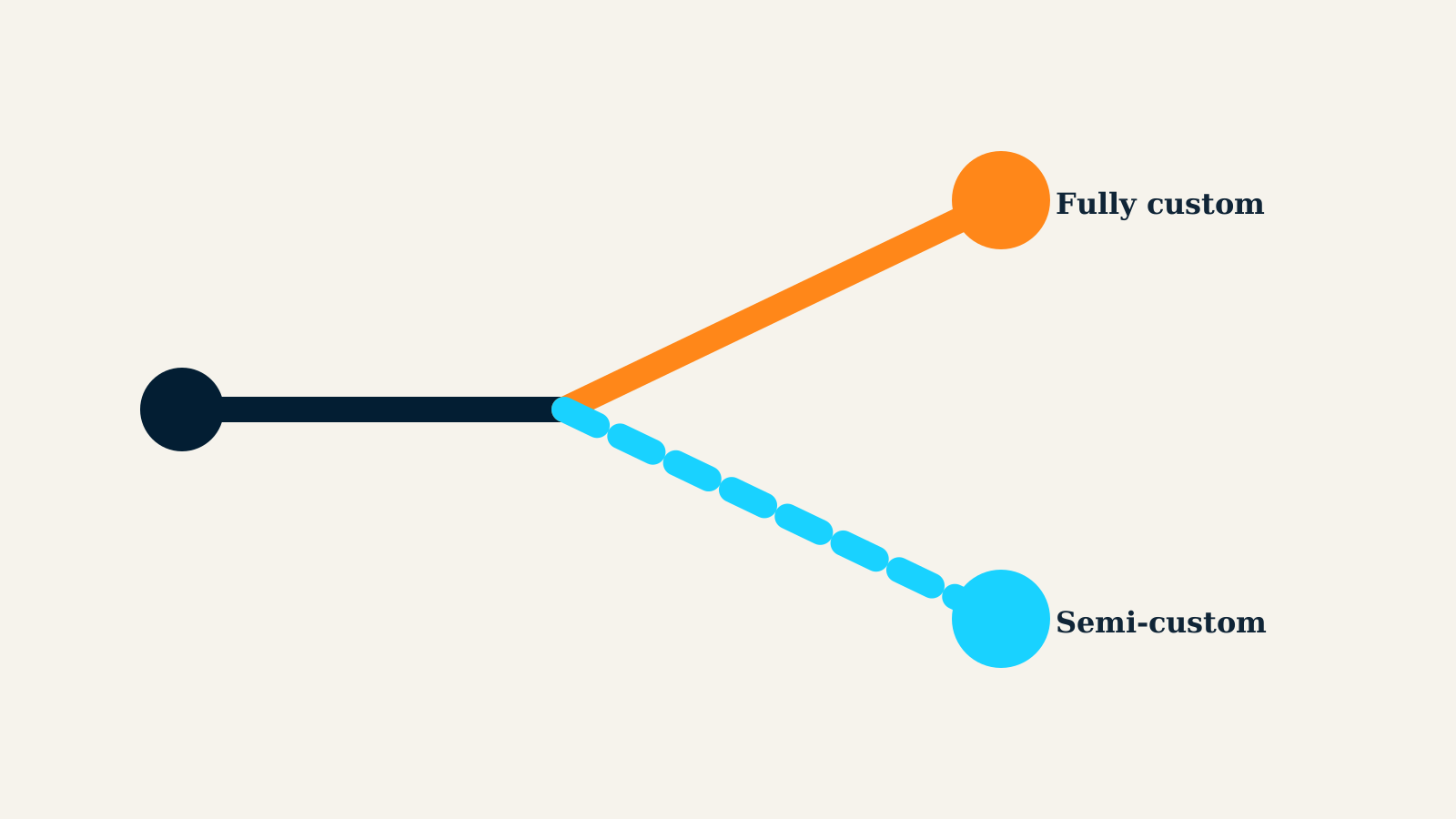
Not every website needs a ground-up visual language invented from a blank canvas, and not every business should settle for a lightly skinned theme that still looks familiar. Fully custom design and agile semi-custom design are both legitimate paths — they optimize for different constraints around brand ambition, timeline, budget, and how unique your customer journey truly is.
This comparison is for leaders choosing an approach before they approve a proposal and lock a calendar. We define both models, show where each fails in practice, and offer a decision checklist you can use with any studio — including when you evaluate Orpheus web work. The right answer is the one that matches the job, not the one that sounds more impressive in a kickoff meeting full of adjectives.
Fully custom design means inventing the system, not just the homepage
Fully custom work starts from brand principles and builds components, layouts, motion, and content patterns uniquely for you across the templates that matter. It is appropriate when differentiation is strategic, when legacy themes keep fighting your message, or when the site is a primary product surface rather than a brochure. You are paying for decision quality and coherence across many page types, not for a single dramatic hero that sits on top of generic interiors nobody planned carefully enough to protect the brand.
The upside is a first viewport and interior rhythm that competitors cannot buy off a theme marketplace with a weekend of configuration. The cost is time: discovery, exploration, system definition, and careful build with fewer shortcuts. Skipping system work and only customizing the hero produces a hybrid that inherits theme constraints while burning custom budget. Custom succeeds when stakeholders can articulate what must feel unique. If the brief is mostly make it modern, you may not yet have enough signal to justify a full invention cycle before clarifying the brand test.
Agile semi-custom starts from proven patterns and specializes where it counts
Semi-custom design uses a mature starter system, design kit, or carefully chosen foundation, then customizes typography, color, key templates, and high-value sections with intent rather than improvisation under deadline pressure. Agile delivery ships usable pages early, gathers feedback from real stakeholders, and deepens craft on the journeys that matter most — often home, services, and conversion paths. Lower-stakes interiors inherit the system instead of receiving bespoke art direction that burns schedule without changing outcomes buyers notice.
This model fits teams that need momentum: launches tied to funding, events, or sales hiring where delay has a clear cost to pipeline. It also fits businesses whose differentiation lives more in service delivery than in unprecedented UI invention. You still get a professional, on-brand site without pretending every interior page needs a unique composition. The risk is settling for generic composition. Guardrails help: enforce brand-forward heroes, limit card clutter, and rewrite theme copy patterns that sound like every other SaaS site in your category.
Compare total cost against the cost of delay and drift
Fully custom proposals look more expensive on day one in a spreadsheet comparison that ignores hidden labor. Semi-custom looks cheaper until endless theme fights, plugin conflicts, and redesign-by-exception consume the savings over a year. Model both money and calendar with honesty. A three-month delay to do it right can be correct — or it can miss a market window that mattered more than perfect tokens. Ask what will be reused after launch so you are investing in a system, not a one-off campaign microsite wearing a company logo.
Design systems from a custom project pay forward into campaigns and product UI when tokens travel. Semi-custom foundations pay forward into faster iteration if the system is clean and documented for editors. Either way, orphan one-off pages are the expensive outcome that quietly returns. Include maintenance in the comparison. Highly unique builds need clearer documentation. Theme-based builds need update discipline. Neither is maintenance-free. Pair the design choice with hosting and care reality discussed in our managed hosting thinking.
Match approach to journey complexity and content volume
Complex journeys — multi-audience navigation, gated resources, calculators, portals — usually benefit from custom information architecture even if visual styling starts semi-custom for speed. Simple brochure sites with a handful of templates often thrive on a refined semi-custom system with sharp brand application. Content volume also matters: large libraries need modular patterns more than one-off art pieces that cannot scale when editors publish weekly without a designer in the room for every page.
E-commerce and membership experiences deserve special scrutiny before you inherit rigid template constraints. Those constraints can block conversion experiments you will want later when growth depends on testing. If experimentation is part of the growth plan, invest in flexibility up front. If the site is mostly proof and contact, speed to a polished semi-custom launch may win. Mobile behavior should influence the choice too. If you anticipate a companion mobile app, keep design tokens portable so brand systems do not trap you inside a stubborn theme forever.
Watch for false binaries in agency proposals and decks
Some proposals sell fully custom while still depending on a rigid theme under the hood with limited escape hatches. Others sell agile as a euphemism for undefined scope and endless soft commitments. Ask what is invented, what is adapted, which templates are in scope, and how feedback rounds work in calendar terms. Concrete artifacts beat adjectives every time. Look for process clarity: workshops, mid-fidelity exploration, design QA in the browser, and a path for post-launch iteration when analytics arrive.
For proposal evaluation tips beyond labels, see three things to look for in a web design proposal. The same scrutiny applies whether you lean custom or semi-custom. Orpheus often recommends a hybrid: custom hero composition and brand system, semi-custom efficiency on lower-stakes interior patterns, and agile release slices that learn from real use. The label matters less than whether the plan protects brand where it counts and ships where momentum counts for the business calendar.
Use a decision checklist with your stakeholders openly
Score these factors openly with the people who will live with the result: need for visual differentiation, timeline hardness, budget ceiling, content readiness, internal design capacity, and how much the site must evolve in year one. High differentiation plus a soft timeline leans custom. Hard deadline plus clear existing brand assets leans semi-custom with sharp prioritization and fewer invent-from-scratch moments. If scores conflict, shrink scope rather than pretending a fantasy plan will hold under pressure from every department.
Ship the brand-critical templates first and schedule a second phase for deeper custom interiors once messaging and analytics teach you what users actually need. Choosing still feel muddy after the scorecard? That is a signal for a short discovery engagement rather than a giant fixed bid built on guesses. Browse work to see how different fidelity levels can still feel intentional, then ask for a recommendation tied to your constraints instead of a one-size pitch that ignores your calendar and content reality.